
Every corner of Istanbul has historical and touristic features. It’s almost impossible to count them all. Some of the most important ones are.
Ottoman Traces in Istanbul
Anadolu Fortress: It was built by Sultan Yıldırım Bayezid on the Anatolian side of the Bosphorus. Akca Hisar, Yeni Kale and Güzelce Hisar are named after their names. It is the guardian of the Bosphorus and consists of three main towers.
Rumeli Fortress: It was built on the Rumeli side of the Bosphorus by Fatih Sultan Mehmed. The plan of the fortress is in the form of the name of HZ. Muhammad. There are 17 towers. Its height is 22 meters.
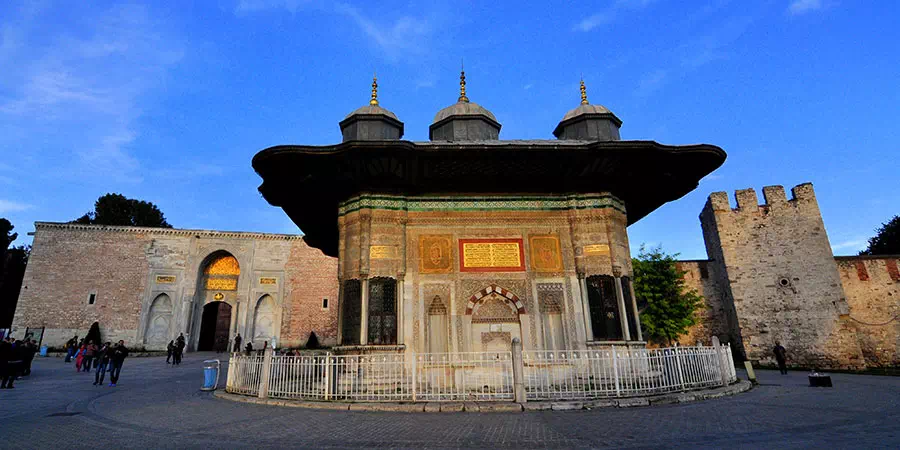
Topkapi Palace: After the conquest of Istanbul, Fatih Sultan Mehmed Han started to build it. The construction of the palace, which started in 1466, was completed in 1478. There are several sections of the palace covering 699 decares. It is called ıs Topkapı because of the tower in front of the palace and the cannons at the front of the palace.
Dolmabahce Palace: Dolmabahce Palace, built during the reign of Abdulmecid I, lasted for 13 years, was built in a baroque style. It is one of the most important historical buildings with its 4.5 ton crystal chandelier located in one of the 285 rooms and 43 halls and halls.
Suleymaniye Mosque: Suleymaniye Mosque, which is the journeyman of Mimar Sinan, is located on the third hill of Istanbul with seven taps and is the biggest mosque in Istanbul. Mimar Sinan had his artifact for the 30th anniversary of Kanuni Sultan Süleyman’s accession to the throne. Since Sultan Suleiman the 10th Sultan of the Ottoman Empire, the mosque is 10th.
Blue Mosque: This mosque, which was the work of Sedefkar Mehmet Aga, was the only mosque in the world with 6 minarets. This work, which is also called ında Blue Mosque I. by foreigners due to the tiles in it, was built in 1616 by Ahmet I, the sultan of the period.
Grand Bazaar: The Grand Bazaar, which is one of the oldest, largest and most beautiful bazaars in the world, continues to exist until 1461. There are about 4000 shops.
Yıldız Palace, Beylerbeyi Palace, Çırağan Palace, Anatolian Fortress, Rumeli Fortress, Galata Tower, Hagia Sophia, Egyptian Bazaar. There are many works that add beauty to the Istanbul from the Ottoman Empire to the present day.

Ottoman and Byzantine Heritage in Istanbul: Private Istanbul Guided Tour
A journey to the history of Byzantine and Ottoman Empires. Discover the most important architectural masterpieces of Roman Emperors and Ottoman Sultans.
8 Hours Full-Day Private Guided Istanbul Ottoman and Byzantine Historical Sites Tour. All historical sites in Sultanahmet square.
Certified professional guide in various language options
Historical Tour Private Guide VIP TransferByzantine Traces in Istanbul
The Arcadius Column (Avrat Tasi): Byzantine historians, especially the historian Teofanes, stated that this monument was built in order to eternalize the victories of Emperor Arcadius (395-408) against the Barbarians. In the time of Arcadius, the construction of the column began and his son, II. It was completed by Theodosius (408-450). Arcadius’ statue was placed on the column and it was opened in July 421.
Cemberlitas column: In honor of Emperor Constantinople in the year 330, the column is erected on a hill called Çemberlitaş which is one of the seven hills of İstanbul.
Galata Tower: It was built in 1384 at the highest point between the walls of Genoese colony. The tower was the place where the prisoners were accommodated in the fleet in Kasımpaşa in the 16th century. II. During the Selim period, it was used as an observatory. It was used as a fire control station until 1964 and remained closed for restoration until it was opened in 1967. During this restoration, taking into account the changes made in the Ottoman period, it was ensured that it was more suitable for the structure during the Genoese period. It is known that Hezarfen Ahmet Çelebi tried to fly and fly in this tower.
Obelisk of Theodosius: The Obelisk of Theodosius, or only the Obelisk, is an Ancient Egyptian obelisk, located on the south side of Sultanahmet Square, next to the Serpentine Column. A.D. In 394 – 395, it was brought from Egypt by the Roman Emperor Theodosius I, and was erected today.
Maiden’s Tower: The process of architectural construction It dates back to 341 years. B.C. In 410, from the location of Sarayburnu, the chain is stretched to the island where the tower is located, and it becomes a customs station that controls the entrance and exit of the Bosphorus. The tower, which is used for defense purposes during the conquest of Istanbul, also has the function of guiding the ships with the added lantern. During the repair in 1725, the tower part was slightly changed and a tower with a glass on top and a dome covered with bullet were placed on top. In 1920, the light of the lighthouse has an automatic light-making system. In 1959 it is used as a radar station. Today it has been restored and operated by the private sector as a restaurant.
Basilica Cistern: It was built by Emperor Justinianus in the 6th century to provide water distribution to the city. With a length of 143 m and a width of 65 m, the ceiling of the cistern with a total width of 9,800 m2 carries 336 marble columns at a height of 9 m. Usually, there are some Doric style headings left between the columns in the style of Ion and Korent.
Arch of Valens: Istanbul’s oldest aqueduct. Emperor Valens built it. The arch, which was connected to water resources outside the city during Theodosius I, was one of the most important parts of the network that met the water needs of the city in the late Roman, Byzantine and Ottoman periods for more than 1500 years. The water of the Basilica Cistern came from here.
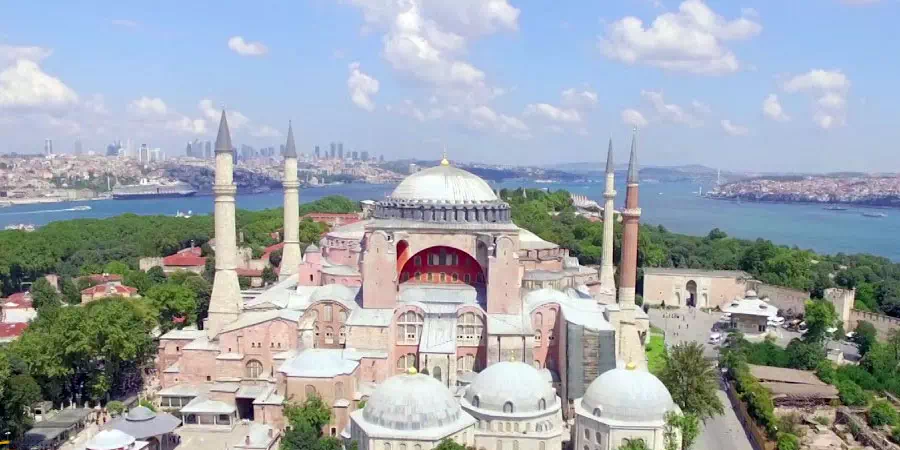
Hagia Sophia Museum: The magnificent Hagia Sophia, meaning ya Church of Divine Wisdom elik, is one of the most visited museums in the world. In terms of art and architecture, it is considered one of the most important monuments. In the 6th century, Hagia Sophia, which is called A the eighth wonder of the world m by the Eastern Roman Philon, was built three times in the same spot. Hagia Sophia is the largest Byzantine church built in Istanbul.

Private Guided Istanbul Sightseeing Tour
Half-day Piravet Istanbul City Tour is a fully guided tour. See the historical top landmarks of Istanbul Sultanahmet. Such as Hagia Sophia, Blue Mosque, Grand Bazaar, and Hippodrome.
4 Hours Half-day Private Guided Sultanahmet tour.
Certified professional guide in various language options
Historical Tour Private Guide VIP TransferPlan Your Visit with Acetes Travel
Reading about What is the Byzantine and Ottoman Traces in Istanbul?? See how Acetes Travel can make it part of your Istanbul itinerary — book direct, free cancellation, 24/7 WhatsApp support.
Explore the Bosphorus Sunset Cruise →